
November 7. 16:40. Tashkent international airport. Air Temperature: 7°c– bitterly cold. The management of Uzbekistan Airways, journalists, and airport staff dressed in green uniforms are all gathered, their gazes fixed on the horizon. They are searching through the dense clouds for some sign of what’s to come... Finally! The Anticipated aircraft’s fuselage touches the ground.
Firefighting vehicles have positioned themselves on either side of the runway. They started spraying water upwards, creating a mist. The arcs converge, forming a radiant, almost magical arch of water. The new Let l-410 aircraft passes beneath this symbolic rain curtain and comes to a stop at its designated place. Cheers, congratulations, flowers, interviews, photos... The newest addition to the fleet is warmly and ceremoniously welcomed.
The Chairman of Uzbekistan Airways, Shukhrat Khudaykulov, is rushing back to his office from the airport. Our conversation begins on the road:
– This is the third L-410 for our fleet. Previously, we had purchased two aircraft of this model. These planes make it easier for passengers traveling to remote areas such as Muynaq, Zomin, and Shahrisabz. Today, our people are flying more than ever. The local air travel market has several airlines besides us, including Silk Avia, one of our subsidiaries.
– To clarify, Uzbekistan Airways is no longer a monopolistic company. There is now competition.
– Yes, but we are not direct competitors to our local airlines. The majority of their leaders and specialists are former colleagues of ours from Uzbekistan Airways. We maintain strong ties and collaborate closely with them. For instance, when a private airline faced delays after purchasing new aircraft, we stepped in and leased those planes under short-term agreements. In short, we are allies, and our relationships represent mutual support.
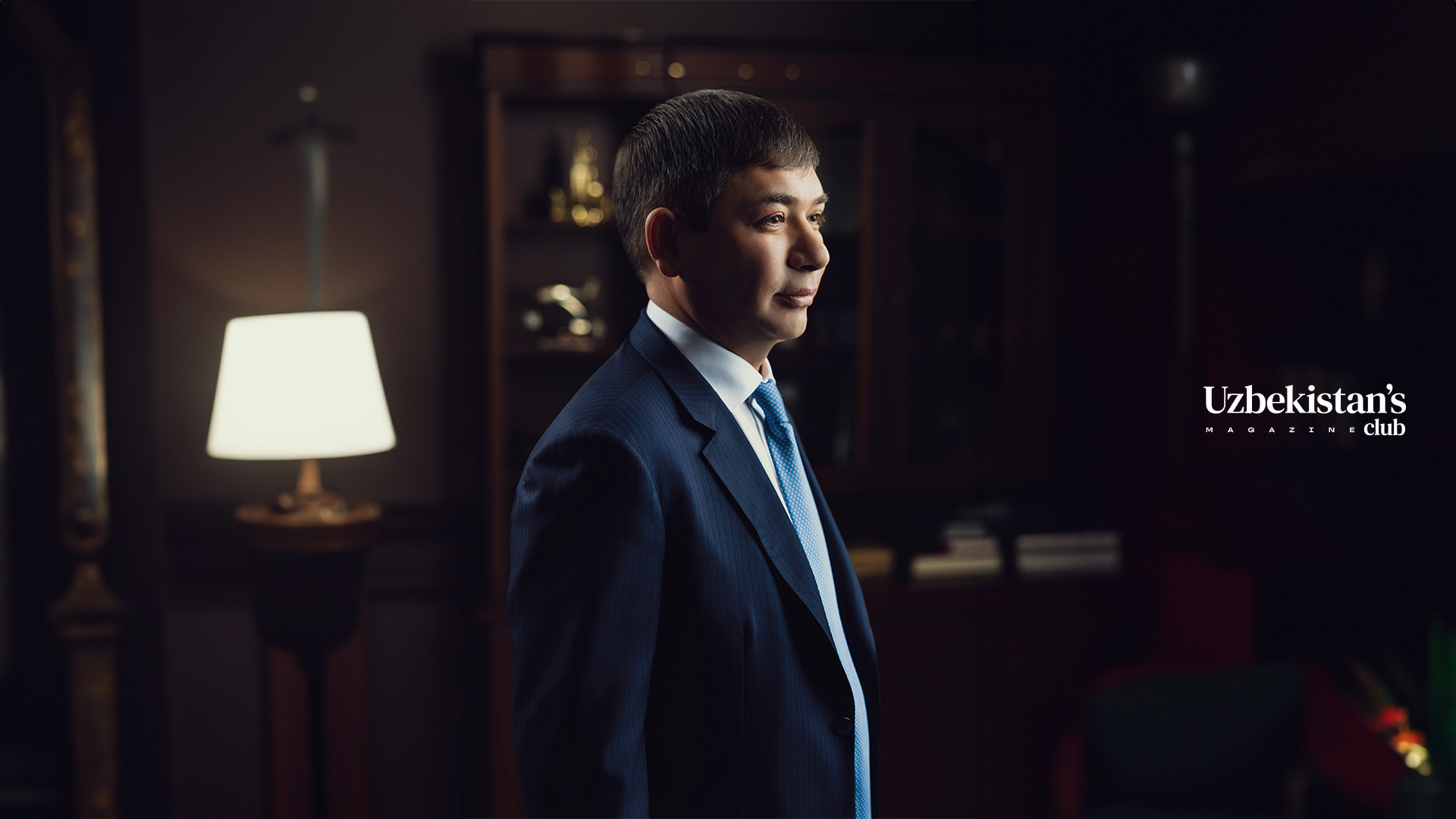
Upon entering the office, we began discussing about transformation over coffee.
– The entire process is the result of the large-scale reform program that began in Uzbekistan after 2017. Under the President’s leadership and a special decree issued in 2018, our company was relieved of several of its functions and restructured as a separate airline. Airports were transferred to a separate entity, and a new regulatory organization was established. In my view, this marked the beginning of both our company’s transformation and the broader modernization of the civil aviation sector as a whole.
How did it all begin? After returning from abroad, I took on the role of commercial director of the airline. There were over 40 representatives like me working overseas. We brought them back to Uzbekistan and encouraged them to implement the knowledge and experience they had acquired overseas. We lowered ticket prices, increased the frequency of flights, and have been steadily expanding our fleet by adding 7-8 new aircraft annually. As the fleet grows, so too does the demand for more personnel–pilots, flight attendants, ground staff, and maintenance crews. We developed a training system for all our employees, aligning it with international standards while considering the national specifics. Even the latest aircraft models are serviced not abroad, but at our very own Uzbekistan Airways Technics facility.
– This summer, when Uzbekistan Airways underwent a rebranding, it adopted the slogan “Central Asian Wings.” Does this imply that competitors need to be viewed from a regional perspective?
– Not just from a regional perspective! It’s a message aimed at the entire world. You see: previously, the airports were owned by the Airline Company. Foreign carriers also had freedom to decide whether to fly to our cities, essentially, they provided “slots”, using aviation terms. Now, we have a contract with Uzbekistan Airports, and foreign airlines are entering Uzbekistan under conditions that similar to ours. That’s where the real competition lies! We operate flights to Turkey, so Turkish Airlines does as well. We also have flights to Korea, and so does Korean Air. This new market-driven reality is forcing us to think differently and implement significant changes within various parts of the company. The market now sets the ticket prices and demands further improvements in service quality and catering.
In fact, by a range of criteria, we see Air Astana as our competitor. However, under the “Central Asian Wings” slogan, we mean that passengers heading to our region from various cities around the world should choose us first. Uzbekistan Airways is the only airline in the region offering a direct flight to New York, and the same goes with Tokyo. We are seeing a growing trend where passengers from neighboring countries fly into Tashkent first before traveling to other destinations.
– Isn’t the goal of turning Tashkent into a meeting point for East and West, like Istanbul, a bit too ambitious?
– Yes, it is, but we are located in a geographically unique position. We’re in the heart of the destinations with a large volume of passengers, connecting Asia and Europe. In fact, we’re already seeing positive growth in transfer passengers. By the end of this year, we aim to increase the share of transfer passengers among our total customers to 10%. Our team is aiming to exceed this by more than 30% in the coming years.
– Which specific routes are being connected, then?
– For instance, passengers can fly from Delhi to Tashkent and then continue onward to London via Uzbekistan Airways. Similarly, travelers can connect from Korea to Europe through our airline. To fully transform Tashkent into a hub that links international flights, we must broaden the geography of our destinations. We are also set to reinstate the Tashkent-Lahore-Tashkent route soon. Pakistan represents a significant market for us as well.
However, we face a substantial challenge–aviation fuel. Currently, local supply meets only about 50% of our aviation fuel needs. This means that the remaining amount must be imported, and the cost of imported fuel is approximately 30% higher. Given the current geopolitical climate, fuel prices are likely to keep rising, which will inevitably impact our operational costs and, in turn, ticket prices. Transfer flights tend to be more affordable, and competing in this space is particularly tough.
Despite these challenges, we remain determined to push forward. Our business optimization department, which consists of some
of the finest experts in the field, is working to align our financial practices with international standards. In the near future, we intend to raise capital either through an IPO or by selling equity in the company. We are currently 85% ready for this.
My respondent spoke with great enthusiasm about the progress, including the successful implementation of online sales platform and the introduction of new software solutions.
When asked, “Isn’t this goal a bit too ambitious?” the response was as follows: “Striving to live up to the name “Central Asian Wings" is what drives and motivates us every day as we come to work.”
I glanced at my watch–it was already past 7:00 PM. Naturally, the question arose:
– How late do you usually work?
– The earliest I leave is 10:00 PM. Just look at all the letters I still need to go through
The chairman pointed to the piles of folders on his desk. I quickly counted about 15.
– You see, this particular folder was used in our airline in the 1990s. I found it in the office and use it on a daily basis. Why? Because it serves as a source of inspiration. In 1993, Uzbekistan Airways purchased an Airbus A310, “a cutting- edge” aircraft for the country at the time. They painted it in the colors of the Uzbek flag and launched international flights. At that point,
no one in the CIS had such a plane–only we did, not even Russia. We didn’t have a national currency, and there was a severe shortage of qualified specialists. This is just one small example. Looking back, the achievements of that time were incredible.
Our conversation didn’t end there; we discussed the challenges facing the company and the fact that, despite everything, the work was incredibly engaging. Eventually, the conversation concluded.
As I left the office, I reflected on the biography
of Shukhrat Khudaykulov: he graduated from the Aviation academy in St. Petersburg in 2006 and has spent his entire career at Uzbekistan Airways. Heading a team that serves 5 million passengers annually, this professional is not only responsible for fulfilling the dream flights of you and me, but also for the aspirations of hundreds of employees.